

About this product
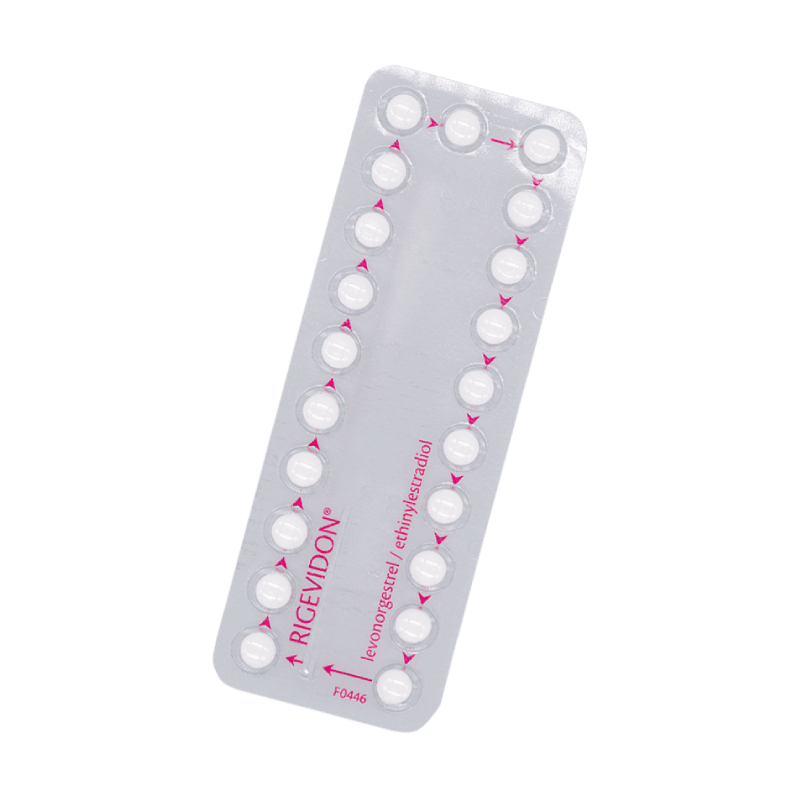
Rigevidon is a combined contraceptive pill that stops you getting pregnant. It holds two hormones: ethinylestradiol and levonorgestrel.
These hormones work together to shut down ovulation, thicken cervical mucus so sperm can't swim through, and thin the womb lining so a fertilised egg can't settle. Take it correctly and you're over 99% protected.
Rigevidon does more than prevent pregnancy. Many women find their periods grow lighter, shorter, and less painful. It can help bring order to irregular cycles and ease premenstrual symptoms too. So you get reliable birth control and a monthly cycle you barely think about.
This is a prescription-only medicine. Our clinician will check it's right for you before we dispense it.
How to use
Take one tablet every day for 21 days, then stop for seven days. During that break your hormone levels drop and you'll have a withdrawal bleed. After the seven pill-free days, start your next strip, even if the bleeding hasn't stopped.
Pick a time that fits your life and stick to it. Setting a daily alarm helps. Swallow the tablet whole with water. You can take it with or without food.
If you begin on day 1 to 5 of your period, you're protected straight away. Start later than that and you'll need condoms for the first seven days.
Missing one pill won't break your protection. Take it the moment you remember, even if that means swallowing two in one day. But if you miss more than one, your shield drops, use condoms for the next seven days and follow the missed pill guidance in your patient information leaflet.
If you vomit or have severe diarrhoea within three to four hours of taking a pill, your body may not have absorbed it. Treat it as a missed pill.
If you'd rather skip your monthly bleed, you can run packs back-to-back without a break. There's no evidence this harms you. Speak with our clinician if you'd like to try this.
Main Ingredients
Each tablet contains ethinylestradiol 30 micrograms and levonorgestrel 150 micrograms. The ethinylestradiol is a synthetic oestrogen that stops your ovaries releasing an egg each month. The levonorgestrel is a synthetic progestogen that thickens cervical mucus and thins the womb lining. Together they give you three layers of protection against pregnancy.
Side Effects & Cautions
Most women take Rigevidon with no trouble. The most common side effects headaches, nausea, breast tenderness, mood changes, stomach pain, and spotting between periods, often settle within the first two to three months as your body adjusts. If they don't ease up, speak with our clinician. A different pill may suit you better.
Serious side effects are rare but worth knowing about. Because Rigevidon contains oestrogen, it slightly raises your risk of blood clots. To put this in perspective: among 10,000 women not on the pill and not pregnant, roughly 2 to 5 will develop a clot in a year. Among 10,000 women on a levonorgestrel pill like Rigevidon, roughly 5 to 7 will. Pregnancy itself carries a higher clot risk than any combined pill.
Watch for the signs. If your leg swells and hurts, if your chest aches or you fight for breath, if a severe headache hits fast, or if you lose feeling or strength on one side of your body, get help straight away. Do not wait. If your lips, mouth, throat, or tongue swell suddenly or you struggle to breathe, call 999 immediately.
The combined pill slightly raises your risk of breast cancer and cervical cancer while you take it. This risk returns to normal within about 10 years of stopping. Meanwhile, long-term use lowers your risk of ovarian and womb cancer.
Who should steer clear
This pill does not fit everyone. You should not take Rigevidon if you have ever had a blood clot, heart attack, or stroke. If you suffer from migraines with aura, if you have or have had breast cancer, if you have severe liver disease, or if you are allergic to any of the ingredients, stay away. The risk also climbs if you smoke (especially past 35), carry significant extra weight, or have a close family member who had a clot before 45. If any of this applies, tell our clinician. A different contraceptive will suit you better.
Can you take it while pregnant or breastfeeding?
Stop the pill the moment you know you are pregnant. If you breastfeed, hold off, the oestrogen in Rigevidon can dry up your milk. It is not recommended while breastfeeding. Wait until you finish nursing, or ask our clinician for a progestogen-only pill that won't touch your supply.
Can you drink alcohol?
You can. A drink does not weaken the pill. But keep your head clear, if you drink until you throw up within four hours of taking your tablet, the medicine leaves your body before it does its job. Treat it as a missed pill and take another straight away.
Other medicines
Some medicines fight the pill. Certain antibiotics, epilepsy drugs, HIV treatments, and the herbal remedy St John's Wort can wash out the hormones and let a pregnancy slip through. Tell our clinician about every medicine you take prescribed, over the counter, or herbal.
Does it affect your fertility?
No. Rigevidon does not harm your long-term fertility. Once you stop, most women find their natural cycle returns within a month or so.
Patient Information Leaflet
Rigevidon isn't right for everyone, and there are things you should know before you start. Here's all the official information. If anything isn't clear, let our clinician know, they can talk it through with you.
Dosage & directions
Main ingredients
Side effects & cautions
Patient information leaflet
Meet Our Pharmacy Team


WEIGHT LOSS — No shady subscriptions or lock-in contracts